Christmas stories for the 2025 holiday season:

I love promoting the stories of other authors who have a connection to North and South. All the books featured here are written by authors who loved John Thornton and were inspired to write because of Gaskell’s story (and Richard Armitage, let’s be honest!).

A longer list of Christmas titles by North and South fans can be found here.

[This website uses affiliate links, meaning: at no additional cost to you, I earn a small commission if you make a purchase from the links provided. As an Amazon Associate I earn from qualifying purchases. Your support helps to cover the cost of hosting this website. Thank you!]

Here are newly released stories:

When Livvy's boyfriend bails on her just days before they're due to take over a run-down cliffside pub, she's left with a choice: give up or do it all alone. So, with a battered heart and a head full of dreams, she rolls up her sleeves and throws herself into transforming The George into the sophisticated gastropub she always imagined.
But Lullbury Bay has other plans.
From Silent Ernie and his cherry picker to the local quiz nights, festive frolics and a springer spaniel called Angel, Livvy soon finds herself swept into the warm and slightly bonkers embrace of village life. And then there's Mark—the kind, thoughtful, frustratingly handsome local who might just be exactly what Livvy needs... if she can open her heart again.
But when a string of unsettling events threatens everything she's built, Livvy must decide what really matters: style or substance, success or belonging, ambition or love?

A gorgeously festive, feel-good story full of quirky characters, cozy pub nights and Christmas magic.


Sophie used to adore everything about Christmas. Hot chocolate and velvet bows, fairy lights and mince pies.
Until the December her fiancé jilted her.
Since then, Sophie opened Sunnyside Hotel, a quaint guesthouse nestled deep in the Cumbrian countryside. And, though it might be winter at Sunnyside, it’s never Christmas.


Marketing her hotel to those who wish to avoid the festivities, Sophie is busy preparing for a season full of joy and laughter, but without the tinsel and mistletoe. Yet, as she finds herself growing closer to her gorgeous neighbor, Brody, her heart begins to melt.


Will this Christmas bring the touch of magic Sophie needs to give love another chance?


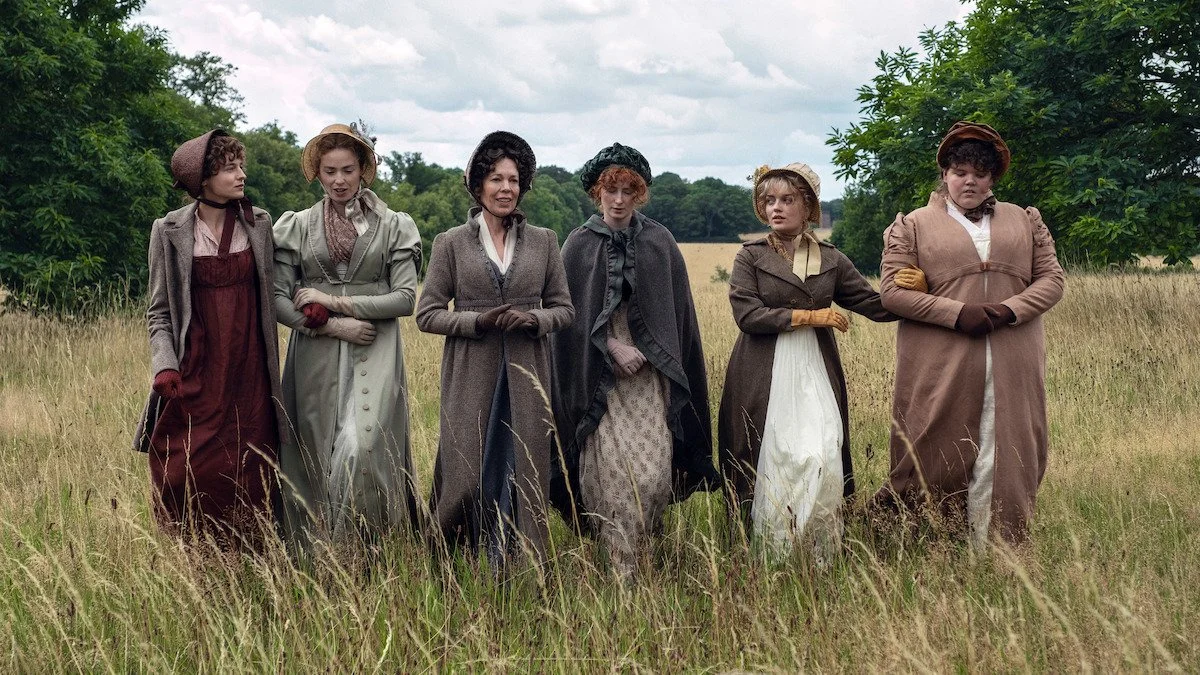
A year after Elizabeth Bennet’s refusal, Fitzwilliam Darcy lives with the echo of her words and the shadow of her absence. Christmastide brings no comfort—only duty, solitude, and a heart he cannot quiet. Yet when his cousin persuades him into joining a country house party at Kelton Manor, Darcy faces the one encounter he vowed to avoid: Elizabeth herself.

For Elizabeth, too much has changed. Lydia’s elopement has blackened her family’s name, and any hope of happiness is gone. To meet Mr. Darcy again is agony enough; to be trapped under the same roof at Christmas is almost unbearable. Surely he must despise her now.

But snowbound days and firelit nights weave their own magic. Between the strains of carols, the laughter of games, and the hush of a winter’s evening, Darcy and Elizabeth discover that regret is not the end of love. When a cherished keepsake reveals the depth of his devotion, Elizabeth must decide: can she trust her heart to him again, even when the world insists they are forever divided?


And last but not least….

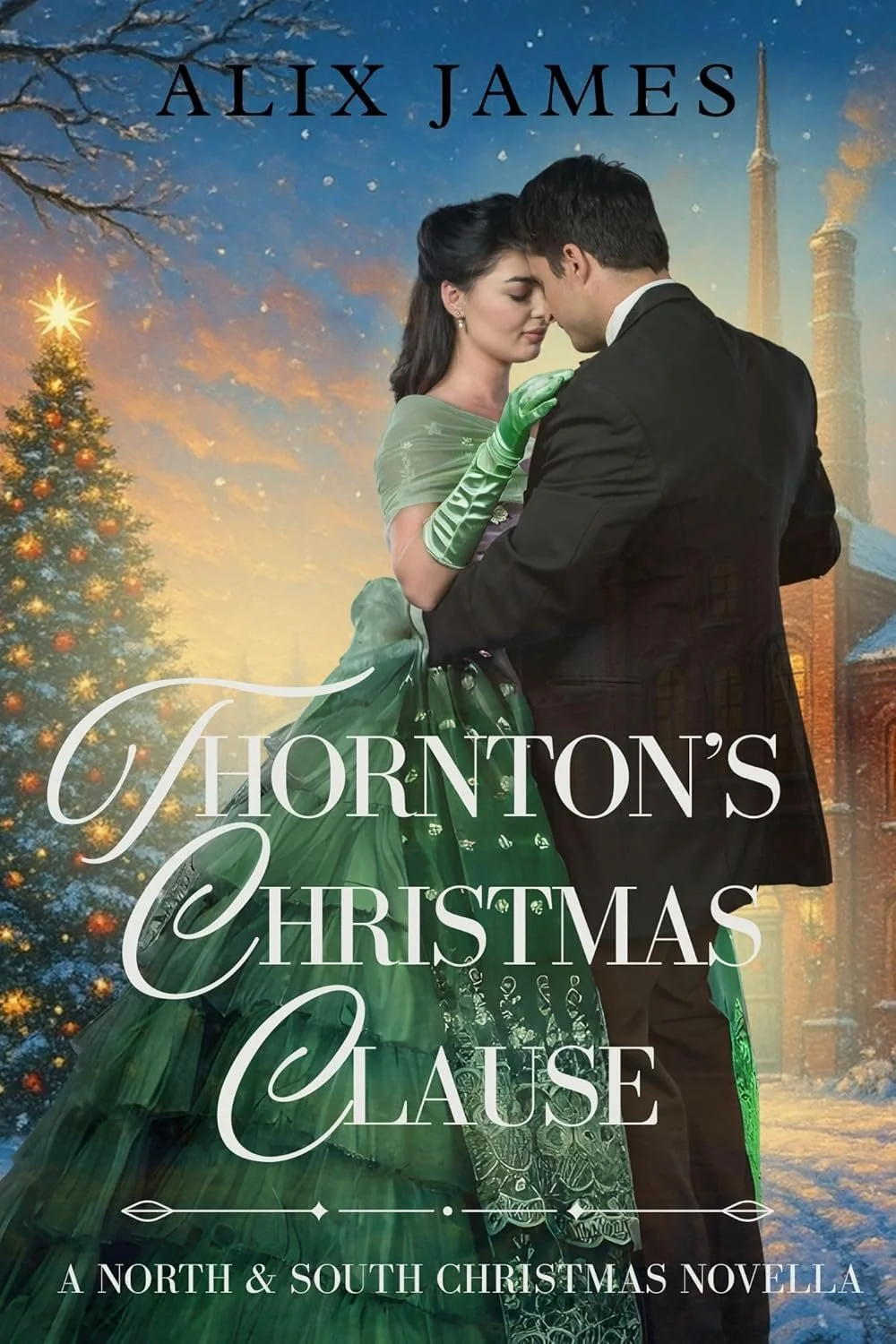
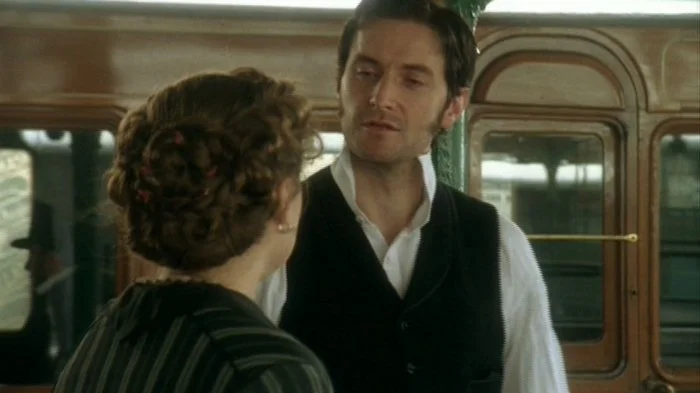
the latest John and Margaret Christmas story!

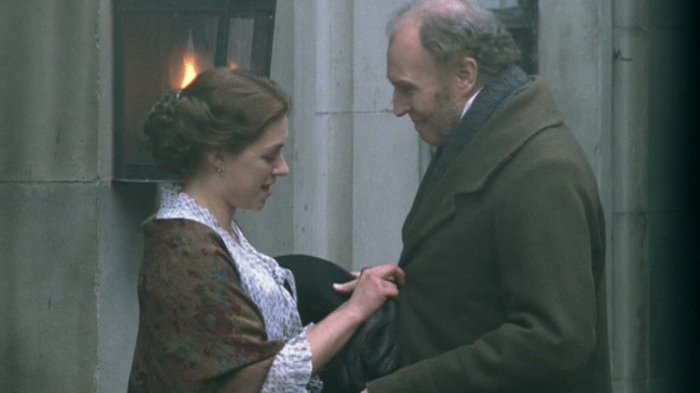
When Mr. Bell dies unexpectedly, Margaret Hale inherits more than his estate—she inherits a legal complication she never anticipated. Summoned to a business meeting just days before Christmas, she is prepared for contracts, signatures, and uncomfortable formalities.
What she is not prepared for is John Thornton.

Once the proud master of Marlborough Mills, Thornton arrives in London carrying a failing business, a lifetime of duty, and a secret keepsake he has treasured for months. He expects nothing but loss—of his mill, his pride, and any final connection to the woman he has never forgotten.

But when a hidden clause in Mr. Bell’s will forces them into a private consultation, old misunderstandings resurface, truths emerge, and Margaret begins to see exactly how much Thornton has sacrificed for others… and for her.

As snow falls over London, Margaret uncovers a discovery that could save the mill, protect the workers of Milton, and bind her future irrevocably with John’s. Yet taking that step requires one thing she has never dared to risk: her heart.

Can love mend what pride once shattered?
And will this Christmas bring healing… or heartbreak?

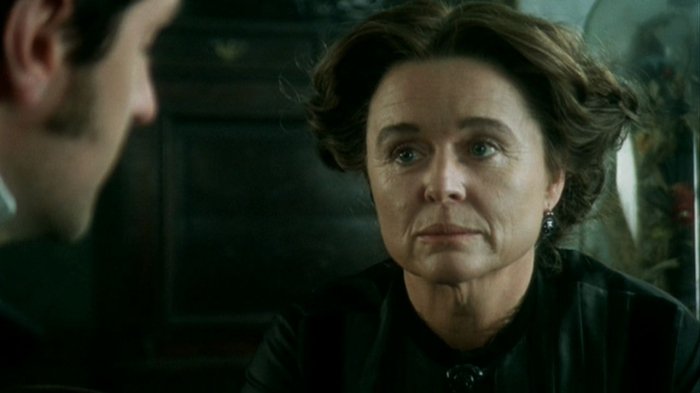
Hannah Thornton as a Mother

What would it be like to have Hannah Thornton as your mother? I imagine most of us would cringe at the thought.

Hannah is definitely not the warm and fuzzy type, but she did happen to produce one heck of a hero! It was her determination and moral strength that set her son on the course to greatness in character and in his far-reaching business affairs.

On the whole, I greatly admire Hannah and love her for her tough nut determination and faith in her son. But we all know she wouldn’t be great fun to live with. 

My interest in this topic today is not necessary about how Margaret would fare living with the Old Crow, but how Hannah’s nature and mannerisms effected and shaped the lives and characters of her children. 

Hannah Thornton adores her son. (BBC image)

So what do we know about Hannah? Gaskell doesn’t give us any real information about her upbringing. And we’re given very little about her husband. We know her husband was duped or persuaded to make a very poor ‘investment’ which turned him into a debtor and ultimately caused him to take his life. She has worn black, or mourning colors, ever since. 

Hannah didn’t wait to become a charity case, but moved her children a ways out of town where John found work in a draper’s shop. Fanny might have been about 3, John about 16. They lived on very little while still setting aside money to pay back all the debt her husband had owed.

We know that she lost an infant or very small child - probably a baby she had between those gaping years between her living children.

All hats off to her for taking command of a dire situation and determining to live with purpose and dignity despite their toils. This is the biggest influence she could have given her son. Her determination to dismiss the shame that society would place on her family shows great courage, strength, and individual moral conviction and worth. These attributes she passes to John. And they stand out amid the superficial value structures upheld by unthinking class tradition and common social custom. 

Hannah is fiercely proud of her son, especially so when his undeviating commitment to following her payback plan brings him into great opportunities and he raises himself and his family to higher status, wealth, and respect. Her pride is justified. But is it too extreme, adversely affecting her ability to evaluate others more compassionately? Her son is perfection. No one else can hold a candle to him.

What about Fanny? How did she become so dissimilar to her brother? What would it have been like for her to have Hannah for a mother? 

The Thorntons at home. (BBC image)

We can infer from Hannah’s careful and patient treatment of her daughter that Fanny was protected from hardship throughout those difficult years. Fanny shows no signs of understanding the effort and self-sacrifice involved in what her mother and brother did. Was she given preferential treatment and special treats which grew into an attitude of entitlement?

There’s oh so much to consider in thinking about the life John lived before Margaret came on the scene. How do you think John was affected by living with a mother like Hannah? Was he introverted naturally, or was it enhanced by his mother’s less than warm and snuggly manner?

What attributes do you think he carried as a result of the years he lived with Hannah and Fanny? What was his home like and what might have been missing from it? Surely not order, but he longed, not even consciously, for more warmth and lightness in his home. We see that when he admires the Hale’s more lived-in home and sees the playful way Mr. Hale interacts with Margaret when she serves her father tea.

What would it have been like for both John and Fanny to live with Hannah? How did it shape them and affect the way they expressed themselves?

There’s no doubt that Hannah’s strength, resolution, and adherence to principles shaped her son’s character. Her desire to protect young Fanny from life’s harsh circumstances was natural and motherly, but being sheltered from hardship may have helped mold Fanny into a more careless and self-absorbed character.

One thing is certain. Hannah supported both her children in the best way she knew how. She would be there for you. And that is what every child deserves.

This article is updated from a post that originally appeared on a former North and South blog: West of Milton.

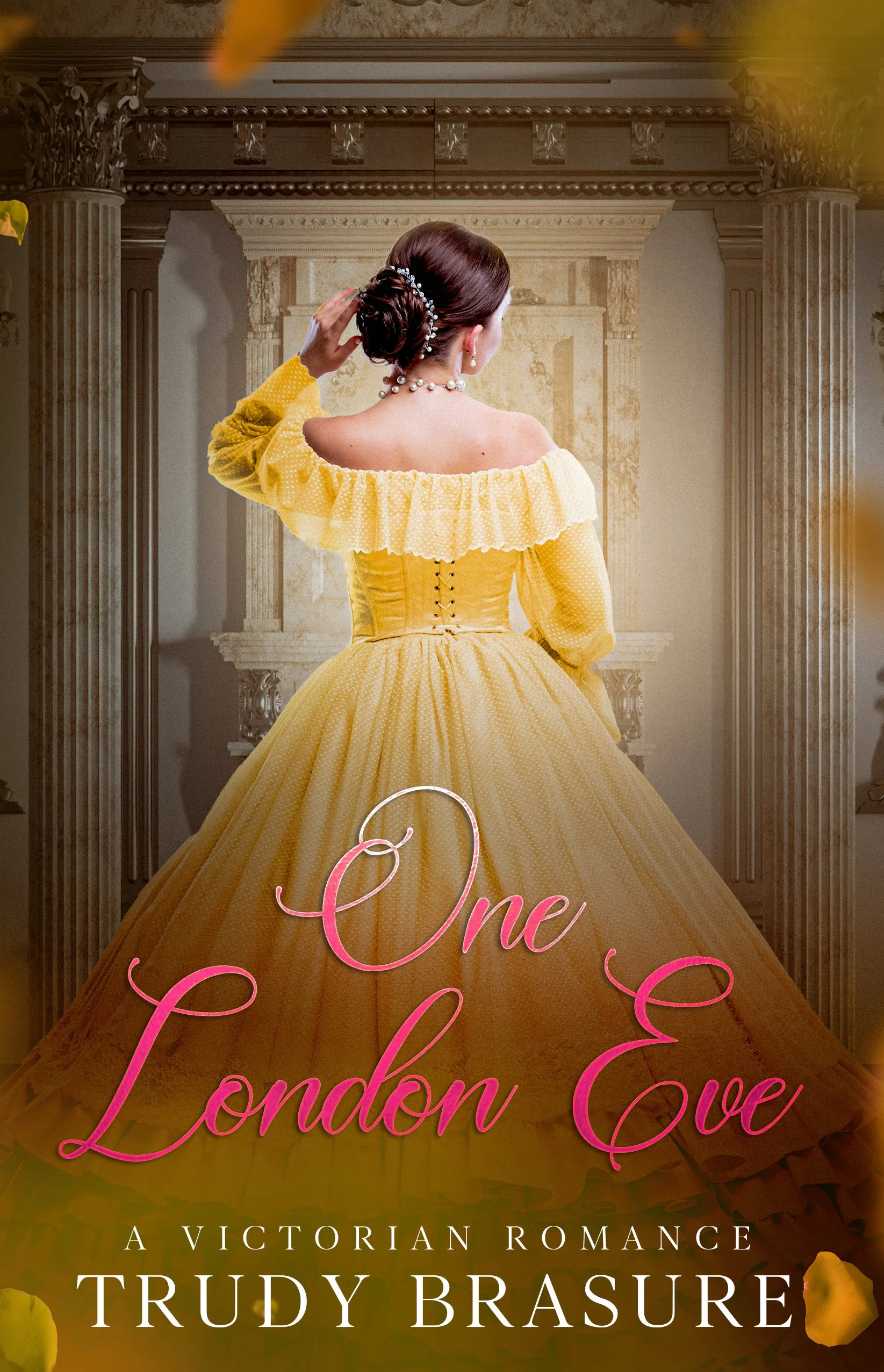
One London Eve - a new N&S story!

It’s been a long time since I last published, so I’m excited to announce that my new North and South variation novel is releasing today!

This story starts with a chance meeting between John and Margaret while Margaret is still living at Edith’s house in London.

I started writing this not long after I had finished publishing In Consequence in 2014. It’s been languishing for over ten years while I dealt with several family issues and a cross-continent move!

I’m so happy to have finished this project so that I can share it with those who love to find themselves in Milton again with their favorite Victorian couple.

I appreciate all your support over the years and look forward to continuing this blog and writing a few more stories!

I hope you’ll enjoy it.

Here’s the link. It’s also on Kindle Unlimited.

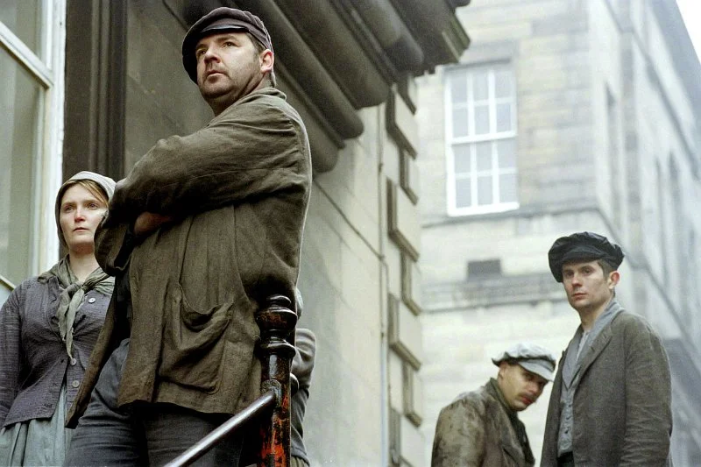
Celebrating 20 years of the BBC's "North and South"

For those of us whose lives were changed by the discovery of the BBC’s 2004 adaptation of North and South, it’s not easy to describe just how deep that impact was. What we do know is that all the elements of a masterpiece—the cinematography, the screenwriting, the music, the story, the settings, and the acting by the cast—combined to make some kind of magic spell that still lingers—and still entrances the unwary who happen upon it.

Just before the Best Screen Kiss Ever (from the BBC’s 2004 adaptation of Elizaeth Gaskell’s North and South)

Those fortunate enough to have caught the original airing in November of 2004 may well remember the ensuing clamor to know more about Richard Armitage, whose performance in the mini-series was nothing short of mesmerizing.

If you know little about what happened after that first airing, or want to reminisce about those thrilling days—here’s a link to an accounting of how the mad rush to discuss North and South on the BBC’s message board crashed their site!

Not all of us, by any means, were there to discover it when it first aired. One of the greatest misfortunes in the history of this great mini-series, is that the American public broadcasting system was going through something of a downturn, and did not air this masterpiece on their national program called “Masterpiece.” I will forever lament this calamity. Although North and South was eventually aired in certain regions of the US, it never hit the country by storm in one fell swoop. We’ll never know what could have happened!

The first heart-stopping view of the imposing John Thornton. (from the BBC’s North and South)

Over time, it has been largely up to Netflix, YouTube, and then Amazon Prime to distribute North and South, and win the hearts of Americans and thousands upon thousands of others in every corner of the globe.

I didn’t happen upon it until 2009, on Netflix. My story about that can be found here.

The effect of this perfect storm of a production has been truly astonishing. Richard Armitage’s fandom exploded, Internet forums like C19 and The Armitage Army buzzed with discussion for years afterward, fans started up blogs, and thousands of people discovered the Victorian author Elizabeth Gaskell and read her book.

And then there was the fan fiction. Oh. My. Goodness! I had not known about fan fiction before finding North and South, and duly spent several months of my free time gobbling up the continuation stories, variations, and what-ifs on the Internet forums I had desperately joined.

The fact that fan fiction began to flow from those captivated by the mini-series, is a high testament to its artistic power. This cinematic story stays with you long after the closing scene. The underlying passion of the otherwise in-control Mr. Thornton, and the depth of regret and sorrow that Margaret endures, sears into viewers’ hearts.

The longing to stay with this beloved couple longer and see them through various situations in our imaginations has compelled many to create their own version of events and publish them on sites such as An Archive of Our Own and Wattpad.

I’m still surprised at the outpouring of love for this film. I know that the leading reason my novel, A Heart for Milton, has been translated into Portuguese and Italian, is because of the ardent followers of the film who wanted more. And those of us who have published North and South fan fiction know that copies of our stories have been sold as far as Japan and India!

The love for this beautiful film production of North and South is truly worldwide—and ongoing. After 20 years, it still shines as one of the BBC’s best period dramas. It will surely live on as a well-loved classic for decades to come.

You’re invited to join North and South’s screenwriter, Sandy Welch, for an anniversary event sponsored by Elizabeth Gaskell’s House. Register here for the November 6th event. (Replays will be sent if you can’t make the live session.)


The Three Witches of Milton

[This post contains affiliate links to books for purchase. If you purchase a book through these links, it gives me a small commission, which helps to cover the cost of maintaining this website.]

I’m happy to encourage the publication of North and South related novels, as I know there are fans of Gaskell’s story that are always eager for yet another dive into the world of Milton with John Thornton!

The latest story to become available to the public is by Caroline Malcolm-Boulton (otherwise known as The Scribbler CMB). I asked Caroline to share some of what to expect in her latest book, which was just released last week, so take a peek at this extremely unique story that combines Austen, Bronte, and Gaskell together.

Tell us about your book:

The Three Witches of Milton was actually inspired by one particular scene from the 2004 adaptation of North and South, and that was when John was reading his newspaper in his parlour, while his mother and sister began to criticise Margaret. For those who know the series, you’ll know how he can’t stand hearing her berated, so he quickly jumps to her defence. This scene formed an idea in my head, which turned into a short story, which then turned into a book.

The Three Witches of Milton, which derives its title from Shakespeare’s Macbeth, is a crossover of the world and words of Elizabeth Gaskell, Jane Austen and Charlotte Brontë. It is, I hope, a celebration of these three women and the concept of womanhood throughout time. To me, these three iconic authors wrote works that tried to make sense of the times they lived in and woven within their narratives, they were also writing a love letter to generations of women to come, reassuring them that being a woman at any time can be hard, but with a bravery that fosters an independent and self-appreciating spirit, women can prevail.

 Furthermore, to my mind, while the words of these writers will forever remain iconic and inspirational, through experimentation, I want to see whether removing them from their original context and resettling them into new scenes and dialogue can give them a reinvigorated, reincarnated impact on readers.

And lastly, this book stands as a testament to the power of sisterhood. Regrettably, our world often witnesses women compelled to undermine and impede one another, driven either by self-interest or by their insecurities. It is truly disheartening that such a culture persists, considering the myriad challenges inherent in being a woman without adding unnecessary burdens onto each other. Thus, this book serves as a tribute to the virtues of kindness, empathy, respect, and acceptance among women, fostering a sphere where we can collectively strive to realise our fullest potential and lead lives of happiness and health.

This story has been great fun to write, I have loved spending time with these characters, the good and the bad, and trying to understand their mindsets and motivations. The experience has also helped me feel closer to the three female writers whom I admire beyond words, and so, it is my pleasure to be able to say that I am dedicating 100% of the lifetime royalties of this book to Elizabeth Gaskell’s House, Jane Austen’s House, and the Brontë Parsonage.


From the book’s blurb:

John Thornton just wants to settle down by the fire after a long week at Marlborough Mills. However, when he enters his drawing room, the master is horrified to find that far from being alone, he is beset by the company of three guileful antagonists, each one intent on trapping him with their feminine charms, claiming this eligible bachelor for their husband. Forced to ward off ’s North & South’s Ann Latimer, Pride & Prejudice’s Caroline Bingley, and Jane Eyre’s Blanche Ingram, John must use his wit and wiles to evade the flirtatious enchantments of these three figurative witches of Milton. But just as he thinks he has eluded their womanly spells, they begin to sharpen their claws and vilify a certain young lady whom John cherishes in his faithful heart, and that, our literary hero, will not stand for.


Thanks to Caroline for telling us about her imaginative creation. And what a wonderful idea it is to donate all proceeds from the sale of her book to the author houses! I’m sure Elizabeth Gaskell’s House will appreciate the donations.

Second Chances: A North and South Story

(This website uses affiliate links, meaning: at no additional cost to you, I earn a small commission if you click-through and make a purchase. As an Amazon Associate, I earn from qualifying purchases. Your support helps to mitigate the cost of hosting this website. Thank you!)

I’m always happy to see new North and South stories published for the wider public to enjoy. Elizabeth Gaskell fan fiction has a long way to go to catch up to the Jane Austen fan fiction out there!

Second Chances: A North and South Story is a newly published book by Diana K. Cooper. I’ve asked Diana a few questions to introduce herself and her work.

When and how did you fall in love with North and South?

I originally read the book many years ago when I was at school and remember being captivated by it, although when I recently re-read it, I realised that I'd forgotten a lot of the detail from the original novel. I watched the 2004 mini-series and have re-watched it many times. In fact, it is a "go-to" for lazy days or when a little comfort is needed.

What inspired you to write your story?

I have always wanted to write a novel. It was the last remaining item on my bucket list (though granted it wasn't long). I've also read a lot of romances over the years, though I do like to read crime novels too. Believe it or not, I hadn't heard of fan fiction until just over a year ago. I had a few months off work due to surgery, and I stumbled upon fan fiction when browsing Twitter, which led me to Tumblr, which then led me to Archive of Our Own. I started reading Tolkien fan fiction and thought to myself, "I wonder if there is anything here on North and South?" and I fell spectacularly down the North and South fan fiction hole. I also read several published fan fictions on Amazon. I decided that having a go at short story writing might be a good place to start to get some experience, so I responded to a couple of writing events and got absolutely hooked.

Tell us about your story and what you hope readers will get from it.

My story is an adaptation, not a continuation, of the book. It starts after the riot, the doomed attempted proposal and Mrs Hale's death. It is January 1855 and John is in love with Margaret. A tragic event enables him to help her and allows Margaret the opportunity to see him differently, and for them to develop a mutual bond. I'm afraid I have made Henry Lennox to be quite evil, poor thing, but it was great fun making him so dastardly. From the cover, you will see that a dog features in my book. I chose the Border Collie breed as I thought it most resembled John Thornton – dressed in black and white, industrious and clever.

There are several "second chances" in my book. Obviously, that is primarily for John and Margaret, but it is also relevant for several other characters in the book, both old and new.

To make someone feel something from words you have written is quite wonderful, so I hope I can stir some emotions and that readers will finish the book and think it was a satisfying story. There is a lot of sweetness in there, and a little humour, as well as some sadness for John and Margaret to navigate through. But ... spoiler alert ... I only deal in happy endings.

Is this your first published work? Have you written other stories? Where can we find them?

Author Diana K. Cooper

It is! I only started writing last January, so I don't have a massive catalogue of other stories, but I do have thirteen "works" on Archive of Our Own . My name on there is dianakc (clearly, I lack any imagination when it comes to handles). I also post the same stories on Tumblr, where I have the same name. I've started posting a little on Instagram too, and you can find me there as d.k.cooper.

What are the positive aspects you have experienced in the realm of fan fiction, individually and globally?

Without a doubt, it is the warm and friendly North and South fan fiction community. I decided to join the Mill at Milton after receiving some lovely comments on my short stories from the Millers. This has introduced me to people from across the world who I now consider to be friends. They have been incredibly supportive and enthusiastic about my book. A friend from the Mill also helped massively with the editing process on Second Chances, though I did rope in my mum and son to help too! I have also met two of the Millers in person, and we have visited Elizabeth Gaskell House and Helmshore Mill together.

Will you be publishing more North and South stories?

I will definitely post more stories on Archive of Our Own. I am currently working on a longish story that I hope to start sharing in the spring. I do have a couple of ideas that might make a book, but I've not decided yet if I would publish again. At the moment I feel content with Second Chances – but perhaps that might change. However, in the future, I'd quite like to be involved in a published short story collaboration.


I hope you enjoyed this brief interview, and I hope you’ll support authors in the North and South community by purchasing their stories.

Thank you for stopping by at More Than Thornton. Happy reading!


When did Thornton begin to think of marrying Margaret?

When did John Thornton begin to think of marrying Margaret Hale? The short answer is … we’ll never know. I doubt if even Thornton could pin a moment to the nascent thought.

But — and this is the fascinating part — we do know that the idea of marrying her was kicking around in his mind for quite a while before he blurted out his love for her in that ill-fated attempt to claim her as his own the morning after the riot.

And how do we know this? Because there are clues throughout the book which I’ll share with you.

But first, let’s recognize that courtship and proposing marriage were an entirely different ball game in the Victorian Era. It was entirely feasible that you could marry someone you’d only socialized with a handful of times. Courtship had one ultimate purpose: marriage. A man’s interest in courting a woman would indicate an interest in marrying her.

Now, we know from Gaskell’s story that Thornton is gobsmacked by Margaret at their very first meeting. He is instantly attracted to her. At the very least, he’s very intrigued by this woman. He has an interest in her. And he has never been interested in any woman before. Something about Margaret makes all his bells and whistles go off!

This first meeting with Margaret takes place in November, and Margaret and Thornton don’t interact with each other again until “early spring” when he comes to take tea with the Hales.

It’s his mother that openly hints at the idea of marriage between Margaret and Thornton.

“Take care you don’t get caught by a penniless girl, John.”

“I am not easily caught, mother, as I think you know. But I must not have Miss Hale spoken of in that way, which, you know, is offensive to me. I never was aware of any young lady trying to catch me yet, nor do I believe that any one has ever given themselves that useless trouble.”

Mrs. Thornton re-asserts a warning that southern girls may be looking for a rich husband, and he basically confesses that his only interaction with Margaret gave him the impression she would not be interested in him as a husband.

“Mother” (with a short scornful laugh), “you will make me confess. The only time I saw Miss Hale, she treated me with a haughty civility which had a strong flavor of contempt. She held herself aloof from me as if she had been a queen, and I her humble, unwashed vassal…”

Thornton is a man of reason and logic. He perceives that Margaret wouldn’t be interested in him as a husband, so it would be illogical of him to consider the possibility. Right? But since when do the longings of the heart obey the rules of logic?

Before he steps into the Hales’ house for tea we have to wonder: has he been thinking about her at all during those winter months?

I believe he has, for he’s scarcely stepped into the Hales’ drawing-room before he’s attributing the comfortable beauty of the room with Margaret’s nature! He’s only known her for half an hour and he believes he knows how a home with Margaret in it would look and feel.

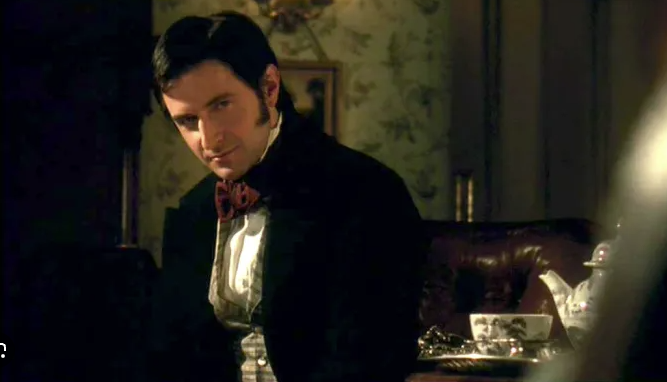
Mr. Thornton likes what he sees. (all images are from the BBC’s North and South.)

And then comes the famous tea-cup scene where Thornton is fascinated with watching Margaret pouring tea. There is definitely a sexual attraction to her. Right about now he’s probably thinking he wouldn’t mind being “caught” by this southern girl!

With his mother’s warning about marriage echoing in his mind, and his senses enveloped and entranced by the warmth and beauty of Margaret and her cozy home, is it possible that the idea of having her for a wife wouldn’t cross his mind?

But any budding images of Margaret as a possible mate are fairly dashed by Margaret’s argumentative attitude in their conversations about the South and the moral obligations of masters to the workers. He feels her scornful disapproval of his kind.

And the next time Thornton has a discussion with the Hales at their home (his third interaction with Margaret), he doesn’t fare much better in gaining any sense of approval from Margaret. This time, Gaskell shows that he is desperately trying to get her to understand him:

“I know we differ in our religious opinions; but don’t you give me credit for having some, though not the same as yours?”

He was speaking in a subdued voice, as if to her alone. She did not wish to be so exclusively addressed.

[and later…]

“I shall only be too glad to explain to you all that may seem anomalous or mysterious to a stranger…”

Mr. Thornton paused awhile before he spoke…he was vexed at the state of feeling between himself and her.

You can feel his frustration here in this second argumentative discussion between them. If he had hoped to move himself up a level in her estimation, he was sorely disappointed. His attempts to develop this relationship in a positive direction are thwarted by Margaret’s moral reprisals of his business positions.

It’s during this second round of arguing that we catch a glimpse of how much he is interested in securing her attention for himself. Thornton’s jealousy flares up at the mere mention of another man’s name in relation to Margaret:

Who is Captain Lennox? asked Mr. Thornton of himself, with a strange kind of displeasure, that prevented him for the moment from replying to her!

Since Margaret shows no reciprocal sign of interest in him, Thornton is forced to smolder -- forced to keep his attraction to Margaret under wraps.

Ah, but a few months later Thornton lets slip a huge hint to his mother. When talk of who is coming to the dinner party leads Fanny and his mother to speak of Margaret in less than approving tones, John cuts into the conversation.

“Mother,” said he, stopping, and bravely speaking out the truth, “I wish you would like Miss Hale.”

“Why?” asked she, startled by his earnest, yet tender manner. “You’re never thinking of marrying her? - a girl without a penny.”

“She would never have me,” said he, with a short laugh.

“I wish you would like Miss Hale” sounds very much like a subdued confession as to where his affections lay! Notice that he didn’t deny thinking of marrying Margaret. His reply is only that she wouldn’t have him!

Mrs. Thornton gets negative points for her treatment of this soft confession. What a terrible comeback she gives her son! And she even grinds on about how Margaret thinks too highly of herself to have him.

Although Thornton is doubtless hurt by his mother’s caustic, careless replies, he shrugs off the conversation with this remark:

“Well, as I’m just as much convinced of the truth of what you have been saying as you can be; and as I have no thought or expectation of ever asking her to be my wife, you’ll believe me for the future that I’m quite disinterested in speaking about her.”

Again, saying that he doesn’t expect to ever ask her to be his wife doesn’t mean he hasn’t considered the consequences of doing just that. He has, and that is what he is admitting. His logical sense knows Margaret wouldn’t accept him. So he believes he can brush off the attraction to her at this point:

“I’m not a lad, to be cowed by a proud look from a woman, or care for her misunderstanding me and my position. I can laugh at it!”

But he’s not laughing when his passion for Margaret is roused into a furor by the events of the riot. After he declares his love for her and she fiercely rejects him, he’s sent into a spiral of misery.

It’s during his dazed and anguished walk in the countryside after his rejection that we see clearly that he did indeed carry a desire to marry Margaret for quite some time. And he’s kicking himself for letting his emotions overtake reason:

He went into the fields, walking briskly, because the sharp motion relieved his mind. He could remember all about it now; the pitiful figure he must have cut; the absurd way in which he had gone and done the very thing he had so often agreed with himself in thinking would be the most foolish thing in the world; and had met with exactly the consequences which, in these wise moods, he had always foretold were certain to follow…”

And there you have it. It’s possible the idea of having Margaret as his wife was planted in his mind the night he had tea at the Hales, but he kept the growing desire safely locked up in his heart, because he knew that she wouldn’t accept him.

Safely locked up, that is, until she threw her arms around him at the riot and he carried her lifeless body up the stairs of his home. Then all his logic couldn’t hold him back from trying his luck.

Although his attempt to win her hand that day was a disaster, maybe—just maybe—his impassioned declarations of love planted the idea of marrying him in Margaret!


Thanks for reading! Need a good book for Christmas travels or holiday relaxing? Check out the seasonal books written by fans of North and South HERE.

(This post may contain affiliate links. Making qualifying purchases from the links provided allows this website to earn a small commission. Your support of this blog in purchasing from these links helps cover the cost of maintaining this site. Thank you!)